



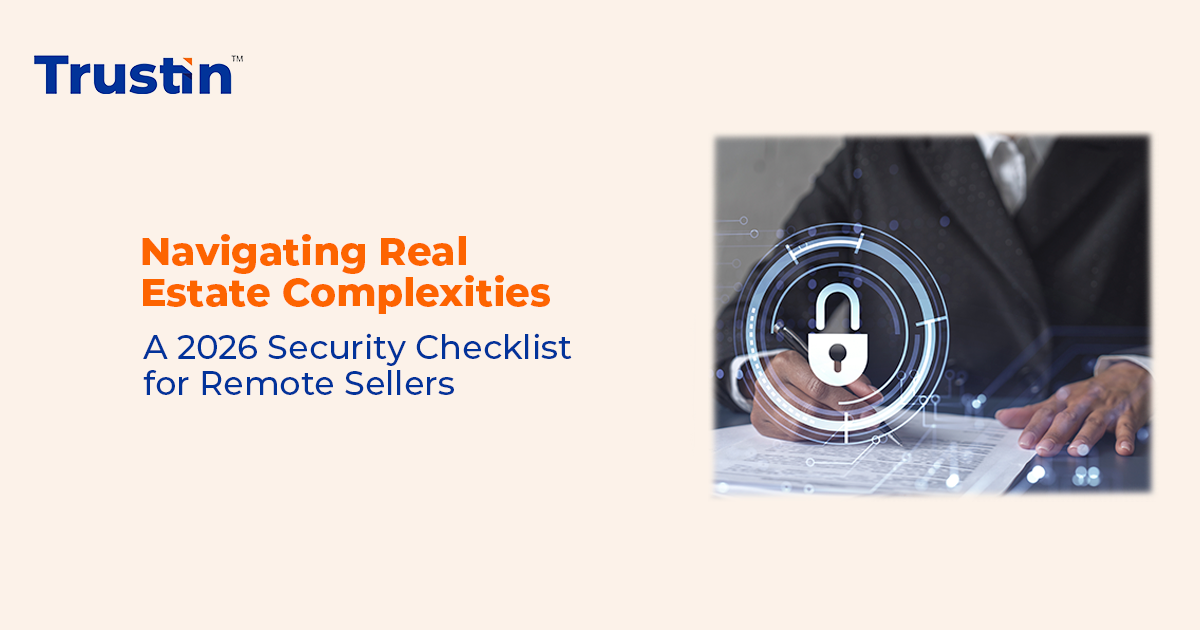
Real Estate Security Checklist for Remote Sellers UAE
Selling property remotely sounds simple. Until something goes wrong.
In 2026, more property owners are focusing on closing deals from different cities and countries. In particular, if we speak about the UAE, it has become a hub for remote real-estate transactions. But this convenience brings up a serious issue: how do you stay secure when you are not physically present?
Remote sellers are facing challenges they did not have a decade before, from payment fraud to identification risks. A missed detail or hasty decision can let you face financial loss or legal troubles.
This is why every seller needs a structured Real Estate Security Checklist. Not just as a guide, but as a protection system.
In this blog, we go beyond basics. You’ll learn how to use a modern Real Estate Security Checklist designed for remote sellers in the UAE, with a strong focus on secure transactions and risk prevention.
Why Remote Selling Needs a Security-First Approach
Remote deals remove physical barriers. But they also remove direct control.
You are not meeting the buyer. You are not signing papers in person. You are trusting digital communication and third parties.
This is exactly where risks appear.
A detailed Real Estate Security Checklist ensures that every step, from verification to payment, is handled safely. It replaces uncertainty with structure.
The Biggest Risks Remote Sellers Face in 2026
Identity Fraud is Smarter
Fraudsters today use advanced tools. Fake documents look real. Emails appear authentic.
Without a strict Real Estate Security Checklist, it becomes difficult to detect these risks early.
Payment Risks Are Higher Than Ever
One of the biggest concerns is money transfer.
What if the buyer delays payment after ownership transfer?
What if funds are sent to the wrong account?
This is why secure transaction handling is a core part of any Real Estate Security Checklist.
Lack of Transaction Control
When you are remote, you depend on others. Agents, buyers, intermediaries.
If there is no structured process, things can go wrong quickly. A proper Real Estate Security Checklist keeps you in control, even from a distance.
A 2026 Real Estate Security Checklist for Remote Sellers
Let us break down a modern, practical checklist built for today’s digital transactions.
1. Verify Identities Beyond Surface Level
Do not rely on basic documents.
Cross-check buyer and agent identities using official records. Request Emirates ID, Trade licenses, and verified contact details.
Identity verification is the first layer of your Real Estate Security Checklist.
2. Work Only with Licensed and Verified Professionals
The UAE has strict regulations for a reason.
You must always work with registered brokers and legal advisors. Have a focus on avoiding informal or unverified contacts.
This step strengthens your Real Estate Security Checklist and reduces unnecessary risk.
3. Never Transfer Funds Without Protection
This is where most remote deals fail.
Direct transfers are risky. Once money is sent, recovery becomes difficult.
Instead, use a secure transaction structure where funds are held safely until all conditions are met.
This is a critical upgrade in your Real Estate Security Checklist and one that modern sellers cannot ignore.
4. Use Secure Transaction Platforms
Traditional methods might not be enough.
Today, smart sellers rely on trusted platforms that manage transactions securely between buyer and seller. These systems ensure:
- Funds are protected
- Conditions are verified
- Payments are released only when both parties agree
This is how you truly secure real estate deals in the UAE in a remote environment.
5. Control Power of Attorney (POA) Carefully
If you are assigning someone to act on your behalf, be precise.
Define limited authority. Ensure the POA is legally attested. Choose someone you trust completely.
A controlled POA process is a key part of your Real Estate Security Checklist.
6. Protect All Documents Digitally
Your documents are sensitive assets.
Use encrypted storage. Share files only through secure channels. Avoid sending important documents over unsecured platforms.
Document safety is a non-negotiable step in your Real Estate Security Checklist.
7. Maintain Full Visibility of the Property
Just because you are remote does not mean you should lose visibility.
Ask for live virtual tours. Request updated reports. Stay informed about the property’s condition.
Transparency adds strength to your Real Estate Security Checklist.
8. Review Contracts with a Legal Expert
Never rush agreements.
Every clause matters. Payment terms, ownership transfer, penalties, everything should be clearly defined.
Legal clarity is a powerful part of your Real Estate Security Checklist.
9. Track Every Transaction Step
Keep records of everything.
Emails, agreements, payment receipts, approvals. Documentation protects you in case of disputes.
A well-documented process completes your Real Estate Security Checklist.
10. Use Milestone-Based Transactions
Instead of a single payment, break transactions into stages.
For example:
- Initial deposit
- Document verification
- Final transfer
Funds should only move when each milestone is completed. This approach helps secure real estate deals in the UAE and minimizes risk.
Security Checklist for Remote Sellers: What Makes It Different
A general checklist is not enough for remote deals. You need a specialized approach.
A strong Security Checklist for Remote Sellers focuses on:
- Distance-based risks
- Payment protection
- Digital verification
- Third-party transaction security
Following a dedicated Security Checklist for Remote Sellers ensures that you are not relying on outdated methods in a modern market.
How to Secure Real Estate Deals UAE in 2026
The UAE market is advanced. But that also means expectations are higher.
To secure real estate deals UAE, you must combine process with technology.
Here’s what works:
- Verified professionals
- Regulated frameworks
- Secure transaction platforms
- Clear legal agreements
You can be confident to secure real estate deals UAE when you combine all the above listed factors.
Mistakes Remote Sellers Are Still Making
Even in 2026, some mistakes are occuring:
Rushing the Payment Process
Speed should never compromise security.
Trusting Without Verification
Always confirm identities and details.
Ignoring Secure Transaction Systems
Relying only on traditional banking increases risk.
Skipping a Structured Checklist
Without a proper Real Estate Security Checklist, errors are inevitable.
Why a Structured Security Approach Matters
A well-planned Real Estate Security Checklist does more than prevent fraud.
It gives you:
- Confidence in decision-making
- Control over the process
- Protection for your finances
- Clarity in communication
When combined with a strong Security Checklist for Remote Sellers, it creates a complete safety framework.
The Future of Remote Real Estate Transactions
Remote selling is not a trend. It is the future.
Technology will continue to simplify transactions. But risks will evolve as well.
The difference between a successful deal and a failed one will depend on how well you prepare.
A modern Real Estate Security Checklist, supported by secure transaction systems will define that success.
Conclusion
Selling property remotely in the UAE can be smooth. It can also be risky.
The outcome depends on how you approach it.
A detailed Real Estate Security Checklist helps you stay structured. A focused Security Checklist for Remote Sellers prepares you for distance-related challenges. And the right tools help you truly secure real estate deals UAE.
In today’s market, trust is not assumed. It comes through systems and secure processes.
If you are looking for a stress-free remote selling experience, do not rely on guesswork. Follow a checklist and use secure transaction methods with platforms like TrustIn. And make every step count.
FAQs
How can I secure real estate deals UAE when selling remotely?
You must use verified professionals, secure transaction platforms, legal contracts, and milestone-based payments to lower risks.
Is it safe to transfer money directly in property deals?
Direct transfers can be risky. It is safer to use secure systems that hold funds until all conditions are met.
What is the biggest risk in remote property selling?
The biggest risk is payment fraud or transferring ownership without secured funds.
How does a secure transaction platform help in real estate deals?
- Holds funds safely until all conditions are met
- Reduces risk of fraud or payment disputes
- Ensures transparency between buyer and seller
How can I avoid fraud in remote real estate deals?
- Follow a Real Estate Security Checklist
- Verify all identities and documents
- Use secure platforms and legal support


Ready to modernize the way you transact

We’ve received your submission, and we’ll be in touch soon!
You May Also Like