




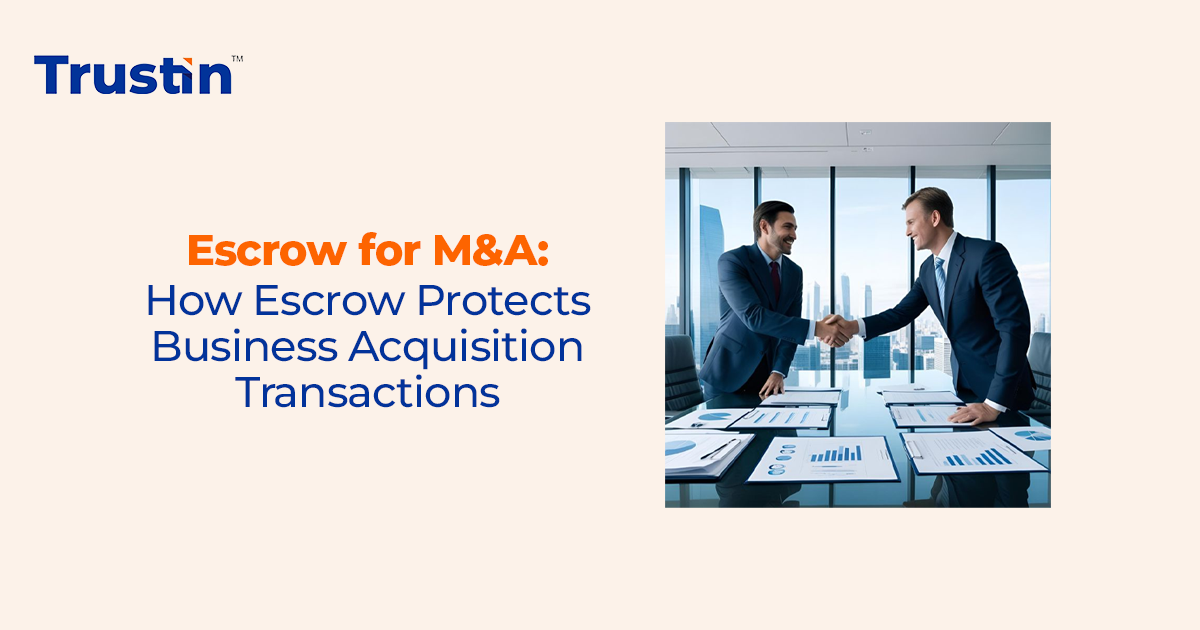
Escrow for M&A in UAE | Secure Mergers & Acquisitions: Guide
An acquisition may close in a single day, but the financial responsibilities created by the deal can continue for months or even years.
A buyer may uncover a tax liability after taking control of the company. A seller may still have to meet a contractual obligation before receiving the final part of the purchase price. There may also be pending approvals, asset transfers or claims that cannot be settled on the closing date.
These situations create a practical question: where should the money sit while these obligations are being resolved?
This is where Escrow for M&A can provide a structured answer. Instead of transferring every part of the purchase consideration directly to the seller at closing, the parties can place an agreed amount with an independent escrow provider. The funds are then released according to conditions agreed in the transaction documents.
What Is Escrow for M&A?
In an M&A deal, the buyer and seller can agree to keep part of the purchase amount with an independent escrow provider instead of paying the full amount to the seller at closing. The amount and purpose of the escrow are decided during the deal based on the risks involved and the protections agreed by both parties. It can cover specific indemnity claims or other liabilities set out in the transaction agreement and also safeguard payments.
Why Is Escrow Used in Business Acquisitions?
The purpose of Escrow for M&A is not simply to "keep money safe." Its value comes from controlling the circumstances under which the money can move.
It gives buyers a defined recovery mechanism
A buyer may uncover an old liability after the deal has closed that was not identified during the transaction process.
If the acquisition agreement places that liability on the seller, the buyer can seek compensation under the agreed terms. An escrow arrangement can provide a reserved amount from which an eligible claim may be satisfied, subject to the agreed claim procedure.
It gives sellers certainty over the remaining funds
Escrow also protects the seller's interests. A seller may be concerned that the buyer could delay payment because of an allegation that has not been established. A properly drafted arrangement specifies when funds can be released and what process applies if a claim is raised.
The escrow provider does not simply decide who is right. Its role is generally to follow the contractual instructions governing the funds.
It separates closing from post-closing obligations
Some transaction issues cannot realistically be finalised on closing day. For example, the final working-capital calculation may depend on accounts prepared after completion. A regulatory condition may also take additional time.
A relevant amount in escrow is better for the transaction to close without treating every unresolved item as an immediate payment dispute.
How Does Escrow for M&A Work?
The process normally starts during transaction negotiations rather than after the deal has already closed.
1. Agree on the escrow amount
The parties determine how much of the purchase consideration should be reserved. There is no fixed amount suitable for every acquisition. The figure can depend on the target's financial position or identified liabilities, and the expected period of post-closing exposure.
The amount should have a commercial reason behind it. An unnecessarily large reserve can restrict the seller's access to proceeds, while an insufficient reserve may not provide meaningful protection to the buyer.
2. Define what the funds cover
The transaction documents should clearly identify which obligations can result in a payment from escrow.
These might include:
● Specific indemnity claims
● Certain breaches of representations and warranties
● Agreed purchase-price adjustments
● Identified tax liabilities
● Contractually defined post-closing obligations
This wording matters because an escrow provider should not be left to interpret broad commercial disagreements.
3. Establish the claim procedure
The buyer should know how to notify a claim and what information must accompany it. They must know when the notice must be submitted. The agreement can specify requirements such as: written notice or details of the underlying liability.
These procedures become particularly important in Escrow for M&A when the parties disagree about whether a claim falls within the agreed protection.
4. Fund the escrow
Once the agreed conditions for funding are met, the relevant amount is transferred to the escrow arrangement. The money is then held separately from the buyer's and seller's ordinary operating funds and managed according to the agreed terms.
A regulated digital escrow platform can also provide transaction records and visibility into the status of the funds.
5. Release the funds
When the relevant conditions are satisfied, the escrow provider releases the funds according to the agreed instructions. The agreement should also explain what happens if only part of the balance is subject to a claim. In some structures, undisputed funds can be released while the disputed portion remains protected.
This prevents a single disagreement from unnecessarily blocking the entire balance.
What Should an M&A Escrow Agreement Specify?
A structure for Escrow for M&A must answer practical questions before the transaction reaches closing.
Amount and currency
The agreement should state the exact amount being held and the currency in which it will be maintained. The parties should also consider exchange-rate movements and any associated banking for cross-border deals.
Holding period
The parties should establish when the escrow period starts and when it ends. The period may differ depending on the risks covered. A tax-related claim, for example, may require a different timeframe from a short-term closing adjustment.
Permitted claims
The agreement should clearly distinguish eligible claims from ordinary disagreements between buyer and seller. This prevents the escrow arrangement from becoming a general-purpose fund for every post-closing dispute.
Notice requirements
The agreement should set out the process for raising a claim. It can state when the buyer must notify the seller, what documents need to be provided and how the claimed amount should be explained.
Release instructions
The parties should determine whether release requires joint instructions, satisfaction of an objective condition, a final determination or another agreed trigger.
Dispute resolution
The agreement should explain what happens when the buyer and seller disagree. The parties may refer the underlying issue to an independent expert or another mechanism defined in the acquisition documents, depending on the transaction.
Escrow vs. Purchase Price Holdback
A purchase-price holdback and escrow may appear similar, but the structure can be different.
With a holdback, the buyer may retain part of the consideration under the transaction arrangement. Under an escrow arrangement, the money stays with a third party until the agreed requirements are met. This keeps the funds separate from both parties and makes it clear that neither the buyer nor the seller can use the reserved amount on their own.
It can also reduce uncertainty when a post-closing claim arises. The money is already subject to an agreed mechanism rather than remaining entirely within the buyer's control.
How Can Escrow Support Cross-Border M&A?
Cross-border acquisitions can involve different currencies or banking systems. A UAE buyer may acquire a company overseas. While an international investor may purchase a UAE-based business. In either situation, moving a substantial amount of money between parties can create additional operational considerations.
A Commercial Escrow UAE structure can provide a controlled mechanism for the agreed funds while the parties complete their contractual obligations.
However, escrow does not replace legal or regulatory advice. The parties still need to assess foreign-exchange rules and investment restrictions. They need to assess tax treatment and other requirements applicable to their specific transaction.
What Escrow Does Not Replace
An Escrow Account should not be treated as a substitute for due diligence. Before completing an acquisition, the buyer may still need to examine:
● Financial statements
● Existing debt
● Tax exposure
● Material contracts
● Intellectual property
● Employment obligations
● Litigation
● Regulatory compliance
● Ownership of assets
● Representations and warranties
Escrow addresses the handling of money. It does not independently establish whether information supplied during due diligence is accurate.
The strongest transaction structure therefore combines proper due diligence with clear contractual protections and a well-defined escrow mechanism.
How Buyers and Sellers Can Prepare
Follow the below mentioned checklist before you go ahead with Escrow for M&A:
- What amount will be held?
- Which specific risks does it cover?
- How long will the funds remain in escrow?
- What evidence is required for a claim?
- Who must receive claim notices?
- Can undisputed funds be released separately?
- What triggers each release?
- Who pays the escrow fees?
- What happens if the parties disagree?
- What happens to the remaining balance when the escrow period ends?
Resolving these points during negotiations is considerably easier than trying to interpret them after a dispute has already arisen.
Conclusion
Escrow for M&A provides a practical way to manage a defined portion of that exposure. It keeps agreed funds protected while linking their release to conditions set by the buyer and seller.
TrustIn provides regulated digital escrow infrastructure for businesses handling acquisitions in the UAE or across borders. The platform is designed for transactions such as mergers, acquisitions and asset purchases.
Check out M&A escrow solutions at TrustIn today! Structure your next acquisition with a clearer and more controlled payment process.
FAQs
Can escrow cover only part of an M&A purchase price?
Yes, buyers and sellers can agree to place only a defined portion of the purchase price into escrow.
Who decides when M&A escrow funds are released?
The release terms are agreed by the parties and documented in the escrow and transaction agreements.
Can an escrow arrangement include multiple release dates?
Yes, funds can be released in stages when the transaction includes clearly defined milestones or obligations.
What happens to unused escrow funds after the claim period?
Any remaining balance is released according to the conditions and timelines specified in the escrow agreement.


Ready to modernize the way you transact

We’ve received your submission, and we’ll be in touch soon!
You May Also Like